
Bathroom ventilation is regulated in both Ireland and the UK to control moisture and protect indoor air quality.
In Ireland, requirements are set out in Technical Guidance Document F (Ventilation) of the Building Regulations. While in the UK they are defined in Approved Document F, which specifies minimum airflow rates for wet rooms such as bathrooms.
These regulations require either mechanical extraction or adequate natural ventilation to prevent condensation, mold growth, and long-term moisture damage.
Why Ventilation Matters in Irish Homes
Bathroom ventilation plays a critical role in maintaining healthy living conditions. This is especially true for a country with high humidity.
Ireland’s climate is naturally damp, with humidity levels often remaining high throughout the year. Bathrooms can quickly accumulate moisture from showers, baths, and everyday use. Without effective home ventilation, this moisture can linger in the air and on surfaces, creating conditions where mold and mildew can develop.
Proper moisture control is essential to protect the building and the health of its occupants. Warm, humid air produced during bathing, combined with the already high humidity, can easily penetrate paint, grout, and even structural materials. It has to be removed quickly.
Excess humidity can damage finishes, weaken materials, and create persistent damp conditions. At this point mold prevention and removal can cost you as much as a whole renovation.
One of the most effective ways to manage this issue is through the installation of bathroom exhaust fans. These systems help remove humid air directly from the room and expel it outside. This reduces condensation on the inside of windows on walls, ceilings, and mirrors.
Proper ventilation also contributes to improved indoor air quality, which is important for overall comfort and respiratory health.
Good bathroom ventilation is a key part of maintaining a safe and durable home environment. Effective ventilation helps control moisture, protect building materials, and significantly reduce the risk of mold and mildew growth.
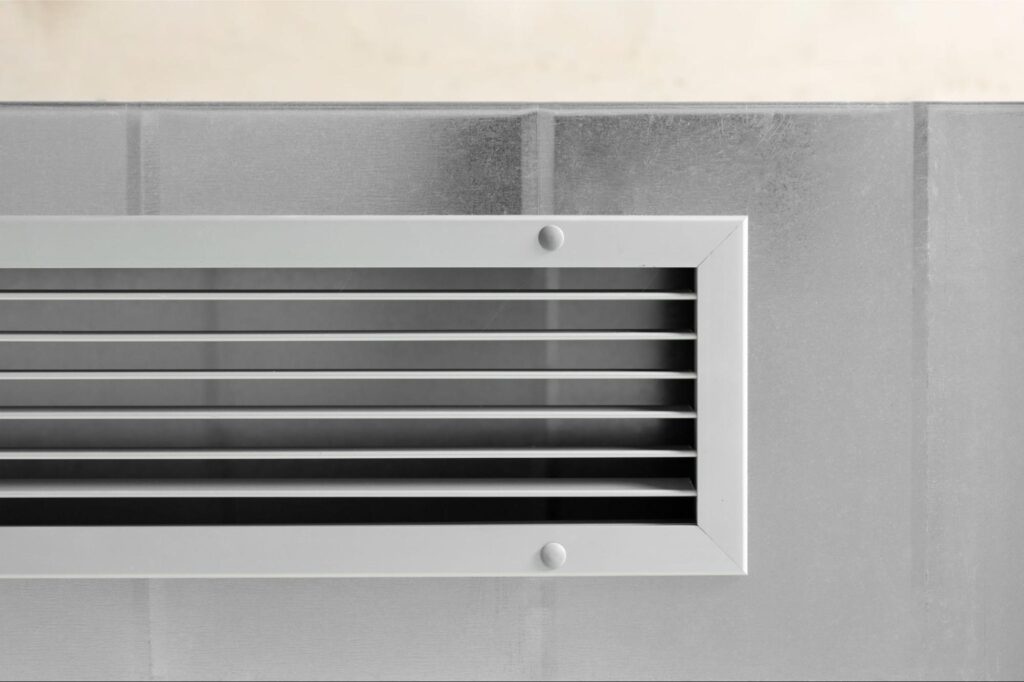
Image source: Freepik.com
Irish & UK Building Regulations Explained
Before you do anything with your bathroom or wet room, you have to acknowledge regulation standards. They may seem complicated, but their role is to keep everything in order.
We have gathered the current legislation in Ireland and the UK to help you understand it.
Bathroom Ventilation in Ireland
In Ireland, bathroom ventilation is regulated under Part F (Ventilation) of the Building Regulations, most recently updated through the Building Regulations (Part F Amendment).
The legislation requires that buildings provide adequate and effective ventilation to protect occupant health and prevent excess condensation and mould growth.
Official guidance on how to meet these requirements is provided in Technical Guidance Document F – Ventilation, published by the Department of Housing.
The regulations focus on removing moisture and maintaining healthy bathroom air quality through purpose-designed bathroom ventilation systems. For bathrooms and other wet rooms, mechanical extraction is commonly required to remove water vapour generated during showers and baths.
The regulations state that ventilation must help limit humidity levels so they do not contribute to condensation or mold growth in the building.
This usually means installing mechanical extract ventilation such as:
- Bathroom exhaust fans;
- Centralised systems like continuous mechanical extract ventilation (cMEV);
- Mechanical ventilation with heat recovery (MVHR).
Modern homes that meet high energy efficiency standards often require mechanical systems rather than relying on natural airflow.
Irish regulations use airflow measurements in litres per second (l/s) rather than imperial units. However, some installers and manufacturers often translate these values into CFM requirements (Cubic Feet per Minute) when selecting equipment. This is where a proper fan sizing guide becomes important. The fan must be sized correctly for the room volume and moisture load to maintain good bathroom air quality.
For homeowners and builders, this means selecting properly rated products such as HVI certified fans (Home Ventilation Institute) or similar tested systems that demonstrate reliable airflow performance.
Choosing energy efficient fans and suitable wet room materials also supports long-term moisture control while helping the home comply with energy performance standards.
United Kingdom
In the UK, bathroom ventilation is governed by Building Regulations Approved Document F: Ventilation. The most recent major update came into force in June 2022, introducing clearer standards for airflow rates, background ventilation, and moisture removal.
Approved Document F sets minimum extract airflow rates for wet rooms to protect indoor air quality and reduce condensation. For intermittent extract systems, the typical minimum extract rate is 15 litres per second for bathrooms, with higher values for kitchens and utility rooms.
The regulations recognise several types of bathroom ventilation systems, including:
- Intermittent extract fans;
- Continuous mechanical extract ventilation (MEV);
- Mechanical ventilation with heat recovery (MVHR).
The correct system depends on the airtightness of the home, the room layout, and the moisture load created by occupants. Higher energy standards means better airtightness, meaning less air leaks. Less air leaks can lead to more humidity if the ventilation is not proper.
For example, newer homes built to higher energy standards often require continuous ventilation systems to maintain stable humidity levels.

Image source: Freepik.com
Mechanical vs Passive Ventilation
Bathroom ventilation generally falls into two main categories: mechanical ventilation and passive ventilation. Both approaches aim to improve bathroom air circulation, but they work in different ways and suit different types of homes and bathroom design.
Passive ventilation relies on natural airflow to remove moisture and stale air from the room. This typically involves vents, air bricks, or windows. In older homes, especially those with less airtight construction, passive airflow can sometimes provide adequate ventilation.
However, this approach is highly dependent on weather conditions, wind direction, and temperature differences between indoor and outdoor air. In climates like Ireland and the UK, where humidity is already high, passive ventilation alone often struggles to do the job.
The most common example of mechanical ventilation is the installation of exhaust fans connected to external ducts. These systems operate either intermittently, typically switching on with the bathroom light, or continuously through low-energy extraction systems.
Mechanical ventilation provides a more predictable and controlled way to maintain healthy bathroom air circulation, particularly in properties with modern insulation and airtight construction.
Mechanical extraction is considered essential to maintaining proper moisture control. Some homes also integrate ventilation systems into broader smart home ventilation solutions. These systems can monitor humidity levels and automatically adjust airflow when moisture rises.
In more advanced setups, bathroom ventilation may also connect to larger whole-house systems installed as part of an HVAC installation. These systems manage airflow throughout the entire property, improving overall indoor comfort.
Image source: Freepik.com
Signs Your Bathroom Ventilation Is Not Compliant
Poor bathroom ventilation often becomes noticeable through everyday symptoms long before it is formally assessed against building regulations.
If the ventilation system is not performing properly, bathroom moisture tends to remain in the space for long periods after showers or baths. This increases the risk of condensation, mold growth, and damage to finishes.
One of the most common warning signs is persistent condensation on mirrors, windows, and tiled surfaces. Moisture that remains for extended periods usually indicates insufficient exhaust fan performance or poor airflow.
In these cases, the ventilation system may not be extracting humid air quickly enough to maintain healthy conditions.
Another sign is the presence of mold and mildew around ceiling corners, grout lines, window frames, or silicone seals. These areas often reveal ventilation problems first because they trap moisture and remain damp for longer. When mold appears repeatedly even after cleaning, it is often a sign that the existing ventilation setup is not removing moisture effectively.
Unusual fan noise levels can also indicate ventilation issues. A fan that becomes louder than usual may be clogged with dust or suffering from mechanical wear. In some cases, excessive noise can also signal that the fan is undersized or working harder than intended to compensate for inadequate airflow.
Incorrect bathroom fan installation can also lead to compliance issues. For example, if the fan vents into the attic instead of outside the building, moisture may accumulate in roof spaces. This can create long-term structural problems. Similarly, poorly designed ducting or blocked vents can significantly reduce the fan’s effectiveness.
Never neglect regular bathroom fan maintenance. Dust buildup inside the fan housing, clogged vents, or worn motors can gradually lower airflow capacity. The system will no longer meet ventilation standards even if it was originally installed correctly.

Image source: Freepik.com
Cost of Installing Proper Ventilation
The cost of installing effective bathroom ventilation can vary significantly depending on the type of system, the complexity of the installation, and the features included. A basic ventilation upgrade is one of the more affordable improvements that can greatly improve moisture control and indoor comfort.
More advanced bathroom ventilation solutions may require additional work such as new ducting, electrical connections, or integration with whole-house ventilation systems.
For a typical bathroom, installing standard extractor fans is usually the most straightforward option. The total cost depends on the fan model, installation time, and whether existing ductwork can be used.
Entry-level models provide basic airflow, while higher-quality quiet bathroom fans are designed to operate with minimal noise while maintaining strong extraction performance. These quieter units are often preferred in modern homes.
More advanced systems may include automatic fan controls, which allow the fan to activate based on humidity levels rather than relying only on a wall switch. These sensors detect rising moisture in the air and automatically start ventilation when needed.
When comparing options, it is also important to consider the fan features that affect both performance and energy efficiency.
These can include:
- Humidity sensors;
- Timer functions;
- Low-noise motors;
- Energy-efficient operation;
- Smart integration with modern home systems.
While these features may increase the initial installation cost, they can provide better long-term performance and reduce the risk of moisture-related problems.
The final cost depends on the building structure and the level of work required to install proper ventilation. Investing in reliable ventilation is one of the most effective ways to protect the bathroom from excess moisture while maintaining healthy indoor air conditions.
Image source: Freepik.com
Common Mistakes Homeowners Make
Many ventilation problems are not caused by the absence of a system, but by small design or usage mistakes that reduce its effectiveness. A few practical bathroom ventilation tips can make a significant difference in how well a ventilation system performs over time.
One common mistake is relying only on opening a window instead of installing proper mechanical ventilation. While windows can help with airflow, they do not provide consistent moisture removal. Especially in humid climates like Ireland and the UK where outdoor air may already contain high moisture levels.
Another frequent issue is installing a fan that is too small for the size of the bathroom. Undersized fans struggle to remove humid air quickly enough, which allows condensation to build up on walls, ceilings, and mirrors. Choosing the correct fan capacity based on room size is essential for effective ventilation.
Improper duct routing is also a common problem. If the ventilation duct is too long, contains too many bends, or is poorly insulated, airflow can be significantly reduced. In some cases, fans are incorrectly vented into attic spaces rather than outside the building, which can lead to moisture accumulation in roof structures.
Many homeowners also neglect routine cleaning and maintenance. Dust, lint, and debris can collect inside the fan housing and ventilation grilles, gradually reducing airflow..
Fans are often turned off too quickly after showers or baths. Moisture remains in the air even after water use stops, so ventilation should continue running for several minutes to fully remove excess humidity.
Simple habits like these can significantly improve moisture control and help prevent mold growth.
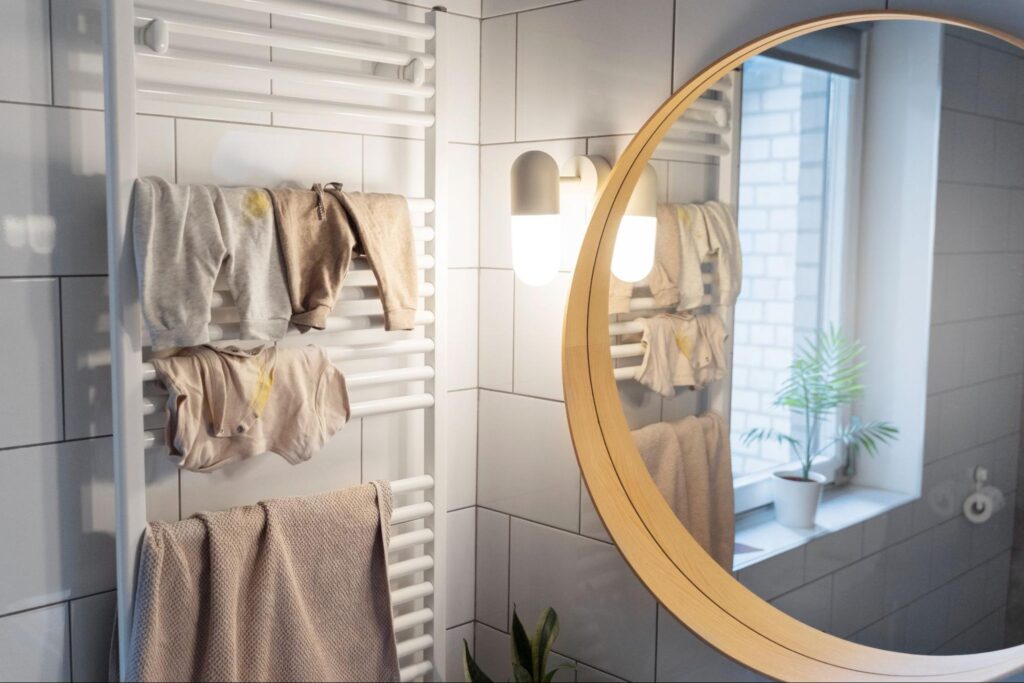
Image source: Freepik.com
Frequently Asked Questions
Is it a legal requirement to have ventilation in a bathroom?
Yes. In both Ireland and the UK, building regulations require bathrooms to have adequate ventilation to control moisture and maintain healthy indoor air conditions. This is covered by Technical Guidance Document F in Ireland and Approved Document F in the UK.
Can a bathroom fan be too big?
Yes. An oversized fan can create drafts, unnecessary noise, and higher energy use. Fans should be sized correctly using a fan sizing guide so they match the room’s ventilation needs.
Would an open window in the bathroom and a regular desk fan push out moisture?
Yes, but not effectively. Proper ventilation requires an exhaust fan designed to remove humid air from the bathroom.
Do cold showers produce less humidity?
Yes. Cooler showers produce less steam than hot showers, which means less humidity in the air. However, ventilation is still necessary to control moisture and prevent mold.